A Day at the Indigo Vat
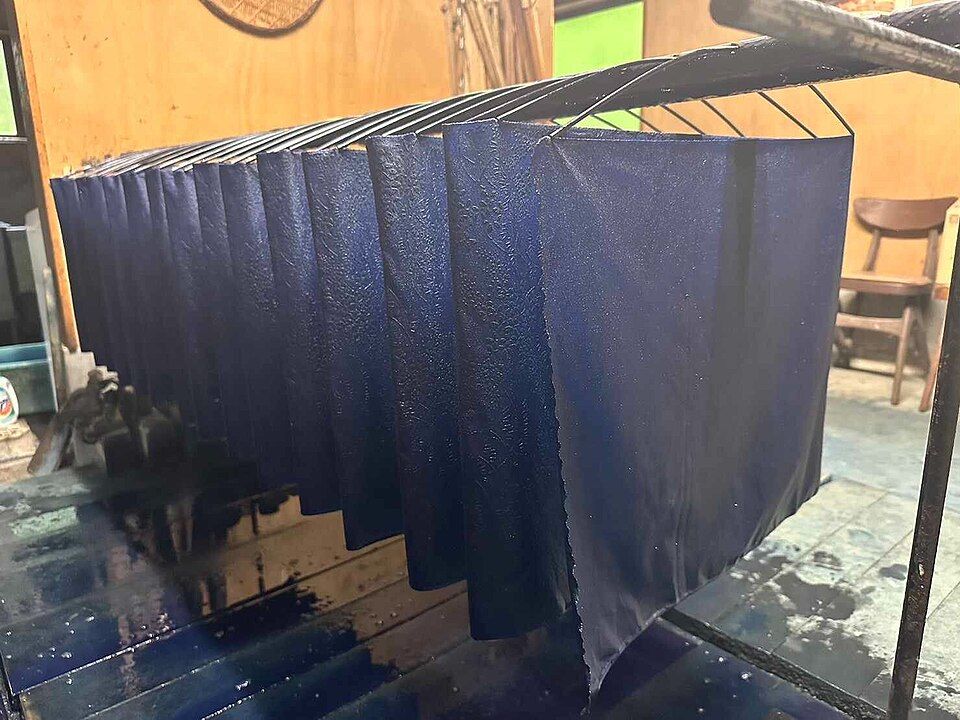
Our indigo vat lives in a five-gallon crock in the corner of the dye room, and it has been more or less continuously alive since the fall of 2022. Unlike synthetic indigo dyeing, which reduces the dye chemically in a matter of minutes, our vat is fermented, fed with wheat bran, madder root, and calcium hydroxide, and kept warm and slightly alkaline by a colony of bacteria that do the actual chemical reduction for us.
Before any dyeing happens, we check the vat: its smell (faintly sweet, almost like old hay, never sour), its color (a coppery, iridescent skin called the flower should sit on top), and its pH. A vat that smells sour or has gone flat needs feeding, sometimes for days, before it's ready to take fiber.
Dyeing itself looks almost anticlimactic. Wet wool or linen goes into the vat a shade at a time, submerged fully and gently, without agitation that would introduce oxygen too fast. It comes out the color of old bottle glass, greenish and unremarkable, and only turns blue over the next several minutes as the dye reacts with air. That transformation, green to blue in front of your eyes, is the reason people get hooked on indigo.
For a deep, near-black indigo, a piece might go through the vat eight or ten times, drying and oxidizing fully between each dip. Rushing this produces a patchy, uneven color that never quite settles. A full day at the vat might produce only a handful of deeply dyed skeins, which is part of why our darkest indigo pieces cost more than the lighter ones.
The vat needs feeding roughly every ten days, more often in the summer when the bacteria are more active. We keep a log, temperatures, feedings, what went in and what came out, that at this point runs to several notebooks. It is, in a very real sense, a living thing we've been tending since before we sold our first indigo throw.
We've had the vat crash twice in three years, once from letting it get too cold, once from a feeding mistake we still argue about. Both times we rebuilt it from scratch, which takes a few weeks of feeding before it's ready to dye anything. A vat, like a sourdough starter, rewards patience and punishes neglect.